

About Me
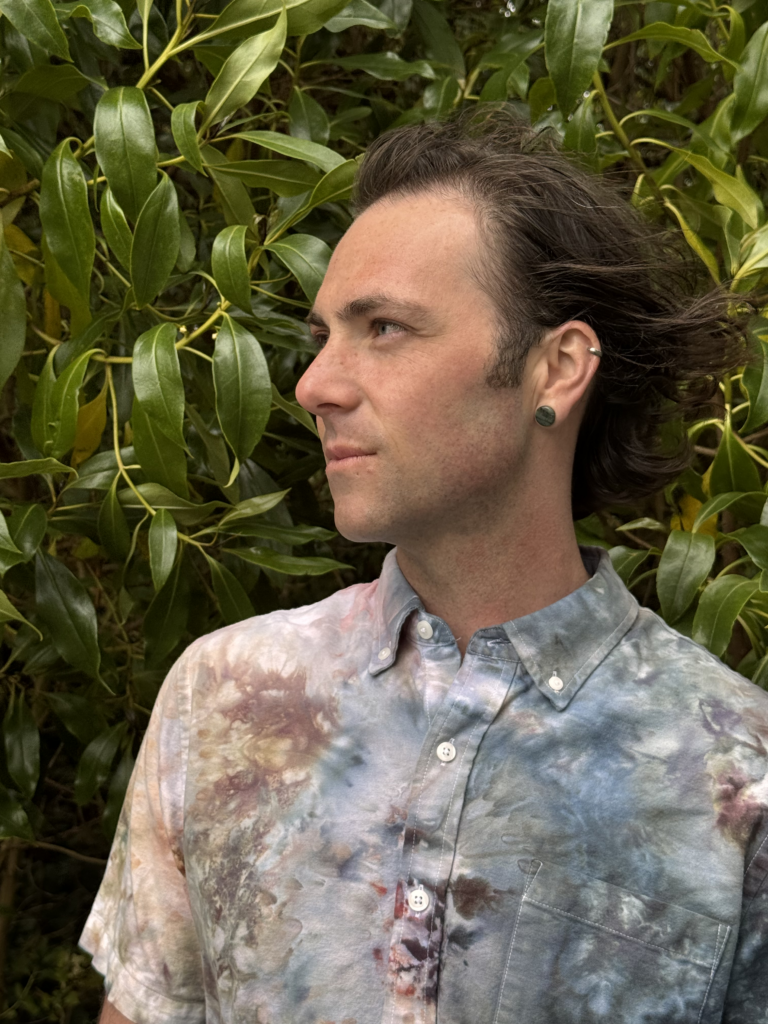
I am a computational neuroscientist studying the relationship between brain structure and function. I grew up in San Diego, California on a ranch with many different animals (e.g., emus, llamas, peacocks, sheep, etc.). I always knew I wanted to be a scientist, but it took me a while to decide what to study. My interests shifted between marine biology, sociology, physics, and neuroscience. While at UC Davis, I began doing primatology research as well as sociological video game research. I ultimately majored in Animal Biology with two minors in Sociology and Professional Writing, which gave me a broad and research-focused skillset.
After graduation, I moved to Shimla, India to follow and track rhesus macaque social networks around the local Hanuman temple. Chasing monkeys was surprisingly fun and rewarding, but it also helped me discover that a career in primatology was not meant for me. Instead, I felt my research interests pull me back toward neuroscience and physics.
To pursue neuroscience in earnest, I obtained a Master’s of Biomedical Imaging at UCSF, giving me a deep understanding of modern neuroimaging methods. After my Master’s, I stayed at UCSF working in a lab studying the brain network effects of a mindfulness-based intervention for adolescents. Network neuroscience sparked a curiosity within me that further increased while working with Dr. Ashish Raj’s on applying physics-informed models to brain networks. This intersection between neuroscience, mathematics, physics, and philosophy was the perfect interdisciplinary blend of my interests.
I am a PhD candidate in the joint UCSF and UC Berkeley Bioengineering program. As my mentor, Dr. Raj has given me the privilege of autonomy to carve out my own research program, so all of my main projects started from explorative work I did on weekends. In general, my research focuses on the properties of the brain’s structural connectome “harmonics” as a scaffold for brain function. These harmonics represent the whole-brain waves that arise from the white matter architecture, and they are fundamental to the brain’s network geometry in the same way a musical instrument’s sound is fundamental to the physical structure of the instrument. If that sounds strange, see my section on graph harmonics for more details and intuition.
Philosophically, I tend to take a more global and decentralized position to neuroscience. Instead of single ‘regions’ being the location of specific functions, my view is that whole-brain waves (i.e., harmonics instantiated by structural connectivity) constructively/destructively interfere to perform computations. In other words, many cognitive and computational operations in the brain happen everywhere, all at once. I have suggested that this framework may help resolve the long-standing “binding problem” in the philosophy of mind. My work aims to advance the scientific of cognition, brain development, brain diseases, and consciousness by taking this structure-function relationship as their foundation.